
Furnace replacement cost for most homes runs about $2,000 to $7,500 installed, depending on the fuel, the size and the efficiency of the new unit. HomeGuide puts the national average at $3,700, and Fixr at $4,800. Gas furnaces are the most common; electric units are cheaper to install but usually cost more to run. This guide compares prices by fuel and home size, explains why some guides still mention a tax credit that no longer applies, and includes a checker to help you decide whether to repair or replace.
The short answer
- Typical installed price: $2,000 to $5,400 (HomeGuide, average $3,700); Fixr says $2,800 to $7,500 (average $4,800).
- Gas furnace: $2,000 to $5,200 installed (HomeGuide), but Angi and Fixr give $3,800 to $10,000.
- Lifespan: gas furnaces usually last 15 to 25 years and electric 20 to 30 (HomeGuide).
- No federal tax credit in 2026: the IRS says the 25C credit doesn’t apply to equipment placed in service after December 31, 2025.
Should you repair or replace your furnace?
Answer six questions. The scoring uses the rules of thumb in HomeGuide’s and Angi’s furnace guides, such as age and the cost of the repair compared with a new unit. It is a starting point, not a diagnosis; a licensed HVAC technician has to inspect the furnace.
Safety first: if you smell gas, leave the house and call the gas company from outside. Never ignore a CO alarm.
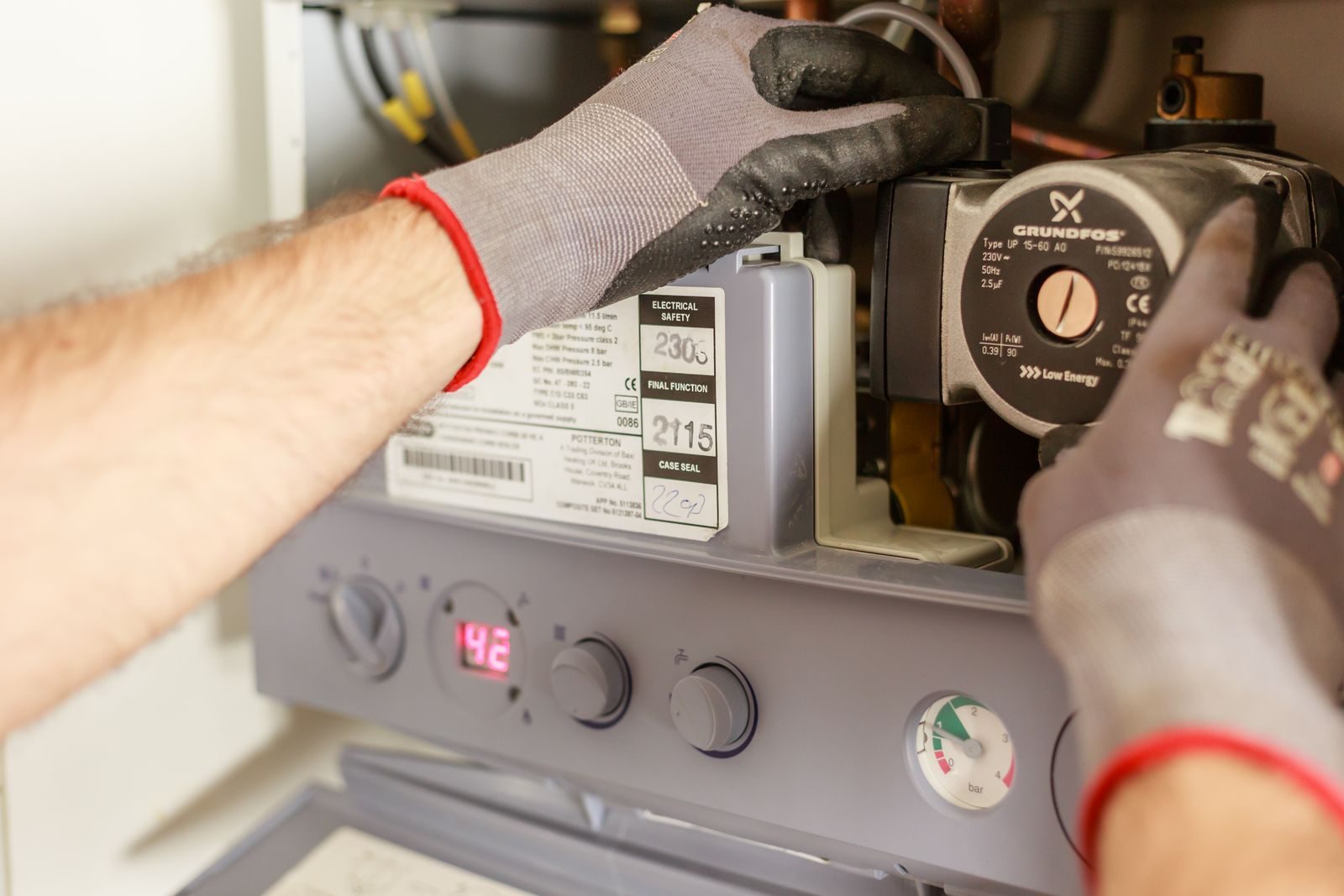
Why furnace replacement cost estimates differ
HomeGuide's figures run lowest. Angi and Fixr give much higher prices for gas furnaces in particular, up to $10,000. The efficiency rating, the size, any duct or venting changes and your local labor rates explain most of the gap. That is why getting several quotes matters more for a furnace than for many other jobs.
Furnace replacement cost by fuel type
| Fuel | HomeGuide (installed) | Angi (installed) | Lifespan (HomeGuide) |
|---|---|---|---|
| Natural gas | $2,000 to $5,200 | $3,800 to $10,000 | 15 to 25 years |
| Electric | $1,900 to $5,600 | $2,000 to $7,000 | 20 to 30 years |
| Oil | $2,500 to $6,000 | $6,750 to $10,000 | 15 to 25 years |
| Propane | $2,200 to $5,700 | $3,700 to $14,200 | 15 to 20 years |
Electric furnaces cost less to install, but HomeGuide estimates yearly running costs of about $1,600 to $2,200, against $400 to $700 for natural gas. If you have gas, a gas furnace is usually the cheaper choice over its life.
Furnace replacement cost by home size
Furnaces are sized in BTUs. Fixr and Angi use a rule of thumb of 30 to 60 BTUs per square foot, depending on climate and insulation. Their installed prices by home size:
| Home size | BTUs needed | Installed (Fixr, Angi) |
|---|---|---|
| 1,000 sq ft | 30,000 to 60,000 | $1,200 to $2,000 |
| 1,500 sq ft | 45,000 to 90,000 | $1,800 to $3,000 |
| 2,000 sq ft | 60,000 to 120,000 | $2,400 to $4,000 |
| 2,500 sq ft | 75,000 to 150,000 | $3,000 to $5,000 |
| 3,000 sq ft | 90,000 to 180,000 | $3,600 to $6,000 |
A rule of thumb is only a start. A good installer calculates the heat your house actually needs instead of matching the old furnace's size.
Furnace replacement cost and efficiency (AFUE)
AFUE is the share of fuel that becomes heat. HomeGuide prices standard gas furnaces (80% to 89% AFUE) at $600 to $1,900 for the unit and high-efficiency models (90% to 99%) at $900 to $3,300. It says high-efficiency models cost 50% to 100% more and save about $100 to $200 a year. High-efficiency models produce water that has to drain away, and HomeGuide lists a condensation drain at $200 to $600 among the related costs.
The tax credit you may read about
Several cost guides still say a high-efficiency furnace qualifies for a federal tax credit of up to $600. That is out of date. The IRS says the energy efficient home improvement credit (section 25C) does not apply to property placed in service after December 31, 2025. Check your state and your gas or electric utility for local rebates instead.
Extras that add to furnace replacement cost
- Removing the old furnace: $150 to $400 (HomeGuide); Angi and Fixr give about $50 to $330.
- Permits: $250 to $1,500 (HomeGuide); Fixr gives $50 to $1,500.
- Ductwork: repairs $200 to $700; replacement $1,400 to $5,600 (HomeGuide).
- New gas line: $500 to $2,000 (HomeGuide).
- Asbestos around old ducts: abatement $700 to $2,200 (HomeGuide). Don't disturb old duct wrap yourself.
Carbon monoxide and safety
Gas furnaces and CO
- The CPSC says fuel-burning heating systems, including furnaces, can produce carbon monoxide, an odorless, colorless and deadly gas.
- The CPSC recommends a professional inspection of fuel-burning heating systems every year, and CO alarms on every level of the home and outside sleeping areas.
- Furnace installation involves gas lines, venting and electrical work. It should be done by a licensed HVAC contractor with the required permits.
- If a CO alarm sounds, don't look for the source: get everyone outside and call 911 or the fire department from outside, the CPSC says. Don't use the appliance again until a trained technician has serviced it.
Watch: How to Install a New HVAC System
How we worked this out
We read the 2026 furnace replacement guides of HomeGuide, Angi and Fixr, the CPSC's 2026 winter heating advice and the IRS credit changes on November 16, 2026. The repair-or-replace checker turns the guides' rules of thumb into a simple score; it is our own tool. We did not inspect any furnaces or get quotes.
Questions homeowners ask
How much does a new furnace cost for a 2,000-square-foot house?
Fixr and Angi give $2,400 to $4,000 installed for a 2,000-square-foot home, for a unit of about 60,000 to 120,000 BTUs. High-efficiency gas furnaces and duct work push it higher.
How long does a furnace last?
Gas and oil furnaces usually last 15 to 25 years, electric furnaces 20 to 30 and propane 15 to 20, according to HomeGuide. Angi gives an average of about 20 years.
Is it worth repairing a 20-year-old furnace?
Usually not for a big repair. HomeGuide suggests replacing a furnace over 15 years old that needs frequent repairs, or when the repair costs more than half the price of a new one.
Is there a tax credit for a new furnace in 2026?
Not a federal one. The IRS says the 25C energy efficient home improvement credit ended for property placed in service after December 31, 2025. Some cost guides haven't caught up yet.
The verdict
Furnace replacement usually costs $2,000 to $7,500, and gas furnaces sit in the middle of that range. If your furnace is over 15 years old and needs a big repair, replacing it usually makes more sense. Ask three licensed contractors for quotes that include a proper sizing calculation, the AFUE rating, removal, permits and any duct or venting work, and don't count on a federal tax credit in 2026.
Sources We Checked
- HomeGuide: How Much Does a New Furnace Cost? (2026)
- Angi: How Much Does a New Furnace Cost in 2026?
- Fixr: Furnace Replacement Cost 2026 (updated January 28, 2026)
- CPSC: Keep Warm and Safe This Winter (2026)
- IRS: FAQs on the changes to sections 25C, 25D and other energy credits (2025 law)
- CPSC: Carbon Monoxide Questions and Answers